
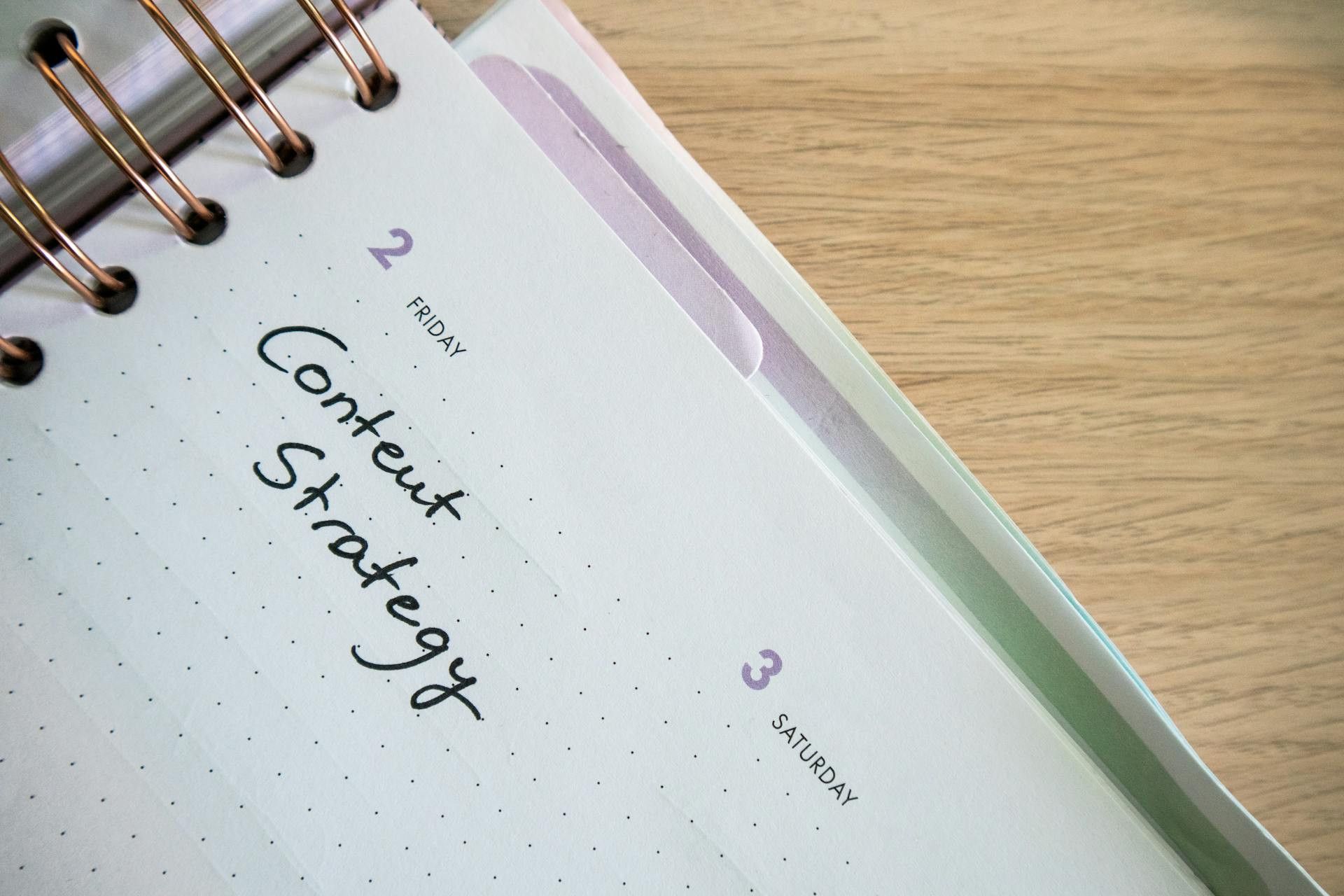
Stop Posting on Social Media Without a Plan: Why a Content Calendar Changes Everything
Posting “when you have time” often leads to inconsistent content, chasing trends, and a message that drifts. Even strong brands fall into this trap—because without a system, social media becomes a constant scramble. The outcome? Missed opportunities, uneven quality, and an audience that never knows what to expect from you.
A content calendar turns strategy into action. It keeps your message consistent, timely, and aligned with your brand voice and your audience’s real needs—so you’re not just posting, you’re building momentum.
What a Content Calendar Is (Simple vs. Detailed)
Simple explanation: A content calendar is a schedule of what you’ll post, where, and when—so your social media is planned, not improvised.
More detailed explanation: It’s a planning system mapping your content pillars, campaigns, and recurring themes into specific deliverables (Reels, carousels, stories, posts) with dates, owners, assets, captions, CTAs, and status. It balances education, trust-building, and promotion—keeping everything on-brand and coordinated across platforms.
Why Posting Without a Plan Costs You
Random posting sends mixed signals. One day educational, next day overly promotional, then disappearing for a week. Consistency isn’t about daily posting—it’s about regularly showing up with a recognizable message.
A calendar protects your time. Instead of daily “What to post?” decisions, you batch planning, create efficiently, and publish confidently.
What a Good Content Calendar Ensures
A strategic calendar delivers:
- Consistency: Your audience hears core messages often enough to build trust.
- Timeliness: You plan for launches, seasons, promotions, events, trends—without chasing them.
- Alignment: Content matches your brand voice, offers, and customer journey—not just vanity metrics.
The Building Blocks of a Strong Content Calendar
The best calendars include:
- Platform + format: Reels, TikTok, LinkedIn post, carousel, email
- Content pillar: theme (education, proof, behind-the-scenes, FAQs, offer)
- Audience intent: awareness, consideration, conversion, retention
- Hook + angle: what makes it scroll-stopping and specific
- CTA: follow, comment, click, book, download, DM
- Owner + status: draft → review → scheduled → posted → repurpose
How to Create a Content Calendar in 45 Minutes
1) Choose 3–5 content pillars
Examples:
- Education (tips, how-to’s)
- Proof (results, testimonials)
- Authority (opinions, myth-busting)
- Relationship (behind-the-scenes, stories)
- Offer (use cases, FAQs)
2) Set a realistic cadence
Pick what’s sustainable for 90 days:
- 3 posts/week (1 education, 1 proof, 1 offer)
- Stories 3–5 days/week (lightweight)
- Biweekly anchor piece (long video/blog) to repurpose
3) Batch topics; assign formats
List 10–15 ideas per pillar; map to platform formats. This prevents repetition and stays on-message.
4) Add timely moments
Layer in launches, holidays (only relevant ones), events, webinars, seasonal peaks.
5) Build in review + repurpose
Plan reposts, recuts, reframes based on performance. Include “repurpose slots,” not just fresh content.
How a Calendar Keeps Your Brand Voice Consistent
Frequency isn’t all—a calendar ensures coherence. Planning lets you match posts to voice traits (e.g., direct, warm, practical), avoiding tone drift.
Add a one-line tone note per entry:
- “Confident + helpful, no hype”
- “Short, punchy, slightly playful”
- “Empathetic, reassurance-first”
Common Mistakes (and How to Avoid Them)
- Planning too far ahead: Leave 10–20% slots open for timely content.
- Too many promos: Balance education + proof + relationship + offer.
- No ownership or workflow: Assign owners and status to keep creation moving.
- Creating from scratch weekly: Use repurposing rhythms to multiply assets.
Summary
A content calendar turns social media strategy into consistent action aligned with your brand voice and audience needs. It reduces daily stress, improves quality, and helps your message build trust through repetition.
Tell me which platforms you prioritize and how many posts per week you want. I’ll draft a two-week content calendar example in your brand voice.